Flaxboard
Bio-based flax chipboard combining fire resistance, formaldehyde-free composition and superior insulation — the sustainable board material of the future.
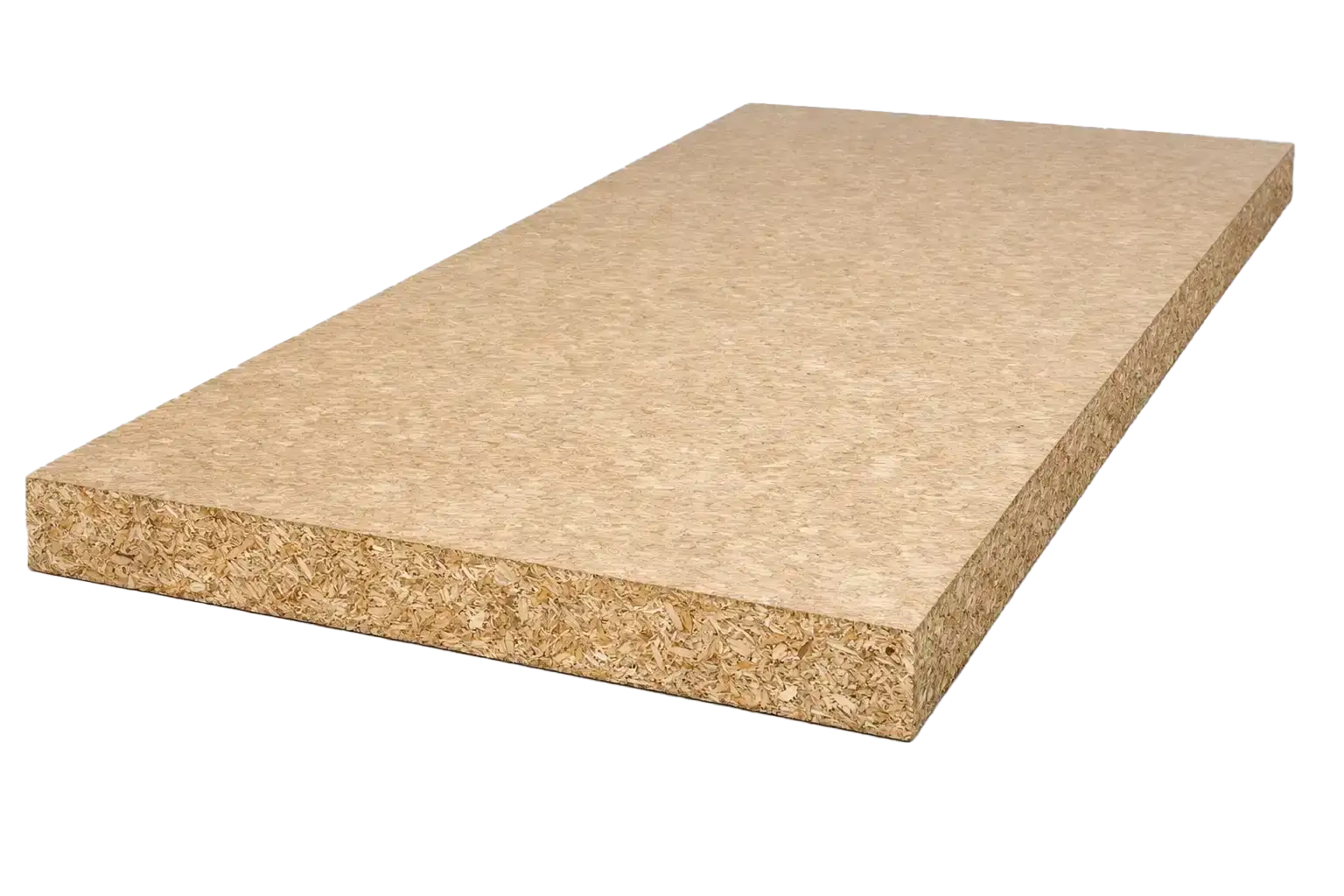
What is Flaxboard?
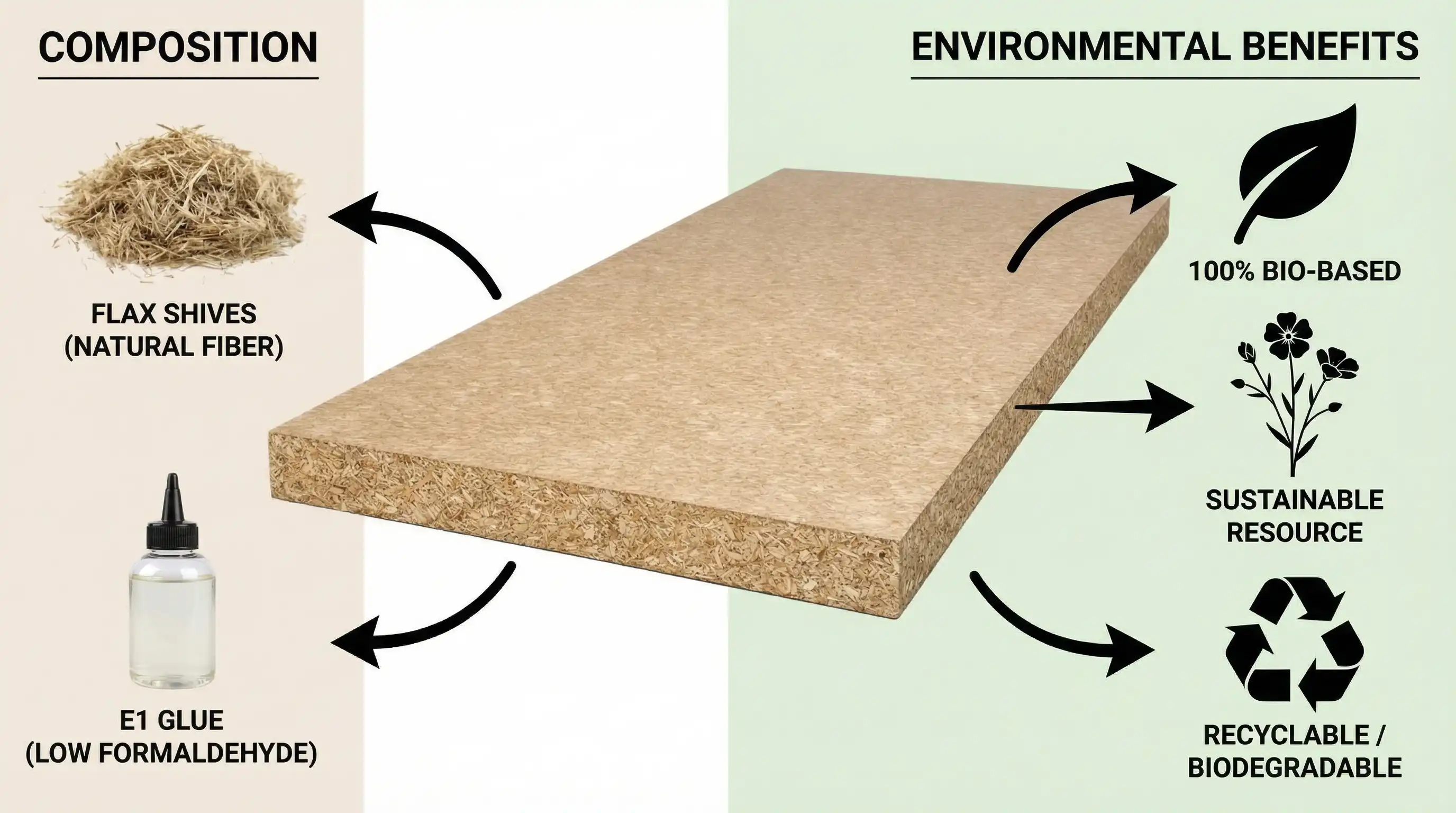
Flaxboard (flax chipboard) is a bio-based board material manufactured from the woody stem parts (shives) of the flax plant. These parts are released during the scutching process where flax fibers are separated for the textile industry.
Unlike wood, flax naturally contains no formaldehyde. Combined with adhesive meeting E0–E1 standards and CARB NAF (No Added Formaldehyde), this makes Flaxboard one of the purest board materials on the market — with extremely low emissions below 0.1 PPM.
At low density (350 kg/m³), Flaxboard offers fire-resistant properties equal to or better than wood, excellent thermal insulation and acoustic dampening. This makes the material ideal as core fill in fire-rated doors and wall panels.
Technical advantages
Flaxboard combines unique technical properties with an outstanding environmental profile.
Fire-resistant
At low density (350 kg/m³), Flaxboard has fire resistance equal to or better than wood. Used as core fill in fire-rated doors and walls.
Superior insulation
Thermal conductivity of 0.071 W/m·K at 350 kg/m³ — almost half that of wood at 0.13 W/m·K. Excellent heat and cold insulation.
Acoustic properties
Excellent sound insulating and sound dampening properties, making Flaxboard ideal for doors and wall panels in noise-sensitive environments.
Formaldehyde-free
Flax naturally contains no formaldehyde, unlike wood. The adhesive meets E0 to E1 standards and CARB NAF (No Added Formaldehyde).
Low weight
At 350 kg/m³, Flaxboard is significantly lighter than wood-based alternatives, resulting in lower transport costs and easier handling in production.
100% circular
The entire flax plant is utilized. Discarded boards are recycled into new boards or packaging material. Production residues power the biomass furnace.
Flaxboard vs wood-based boards
Flaxboard offers clear advantages compared to traditional wood-based chipboard.
Circular economy in practice
The entire flax plant is utilized and nothing goes to waste. From field to finished product — and back again.
Cultivation
Flax is grown on clay soil in the Netherlands, Belgium and northern France. Requires minimal water and pesticides.
Harvest & scutching
The entire flax plant is harvested. During scutching, fibers (textile) are separated from the woody stem parts (shives).
Production
The shives are pressed into Flaxboard. Flax seeds become animal feed, short fibers go to the paper industry, sawdust becomes bedding.
Recycling
Discarded boards are recycled into new boards or packaging blocks. Production residues power the biomass furnace that supplies the factory.
Our supplier
Linex Pro Grass is the only factory in the world that manufactures 100% solid, formaldehyde-free Flaxboard. Based in Koewacht, the Netherlands, they specialize in refining the flax plant into high-quality board material using a fully circular production process.
Linex utilizes the entire flax plant: the stem parts (shives) become Flaxboard, flax seeds become animal feed, short fibers go to the paper industry, sawdust is used as bedding, and production residues power the biomass furnace that supplies the factory with energy. Discarded boards are recycled into new boards or packaging blocks.
Products
- Flaxboard — Standard 2,500 × 1,220 mm, custom dimensions available
- Flax chipboard — Thicknesses 25–50 mm with automatic welding capacity
- E0 to E1 adhesive grades — CARB and NAF compatible
- Varying densities — From 350 kg/m³ and above
- BioBased-certified production
Thickness
25–50 mm
Standard format
2,500 × 1,220
Formaldehyde
Free (NAF)
Areas of use
Flaxboard is particularly suitable for applications where fire resistance, sustainability and indoor climate are in focus.
Fire-rated doors
As core fill in fire-resistant interior doors. Enables 70–80% bio-based content in the finished door.
Wall panels
Insulating and fire-safe fill material in wall constructions with excellent acoustic properties.
Furniture manufacturing
Sustainable and formaldehyde-free alternative for environmentally certified furniture production with focus on indoor climate.
Environmentally certified buildings
Bio-based material that contributes to environmental certifications such as BREEAM, LEED and the Nordic Swan for sustainable building projects.
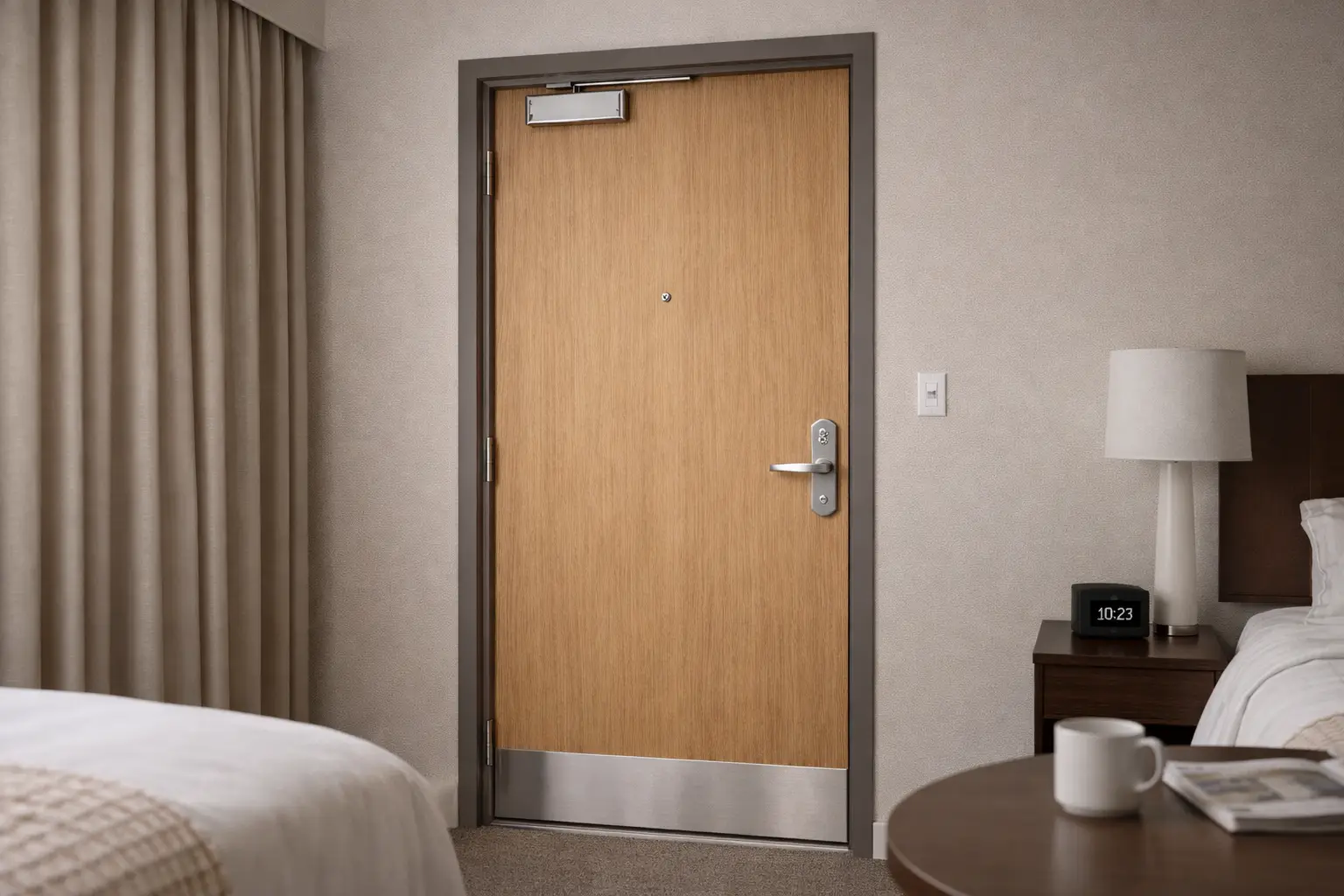
Fire-rated door with Flaxboard core
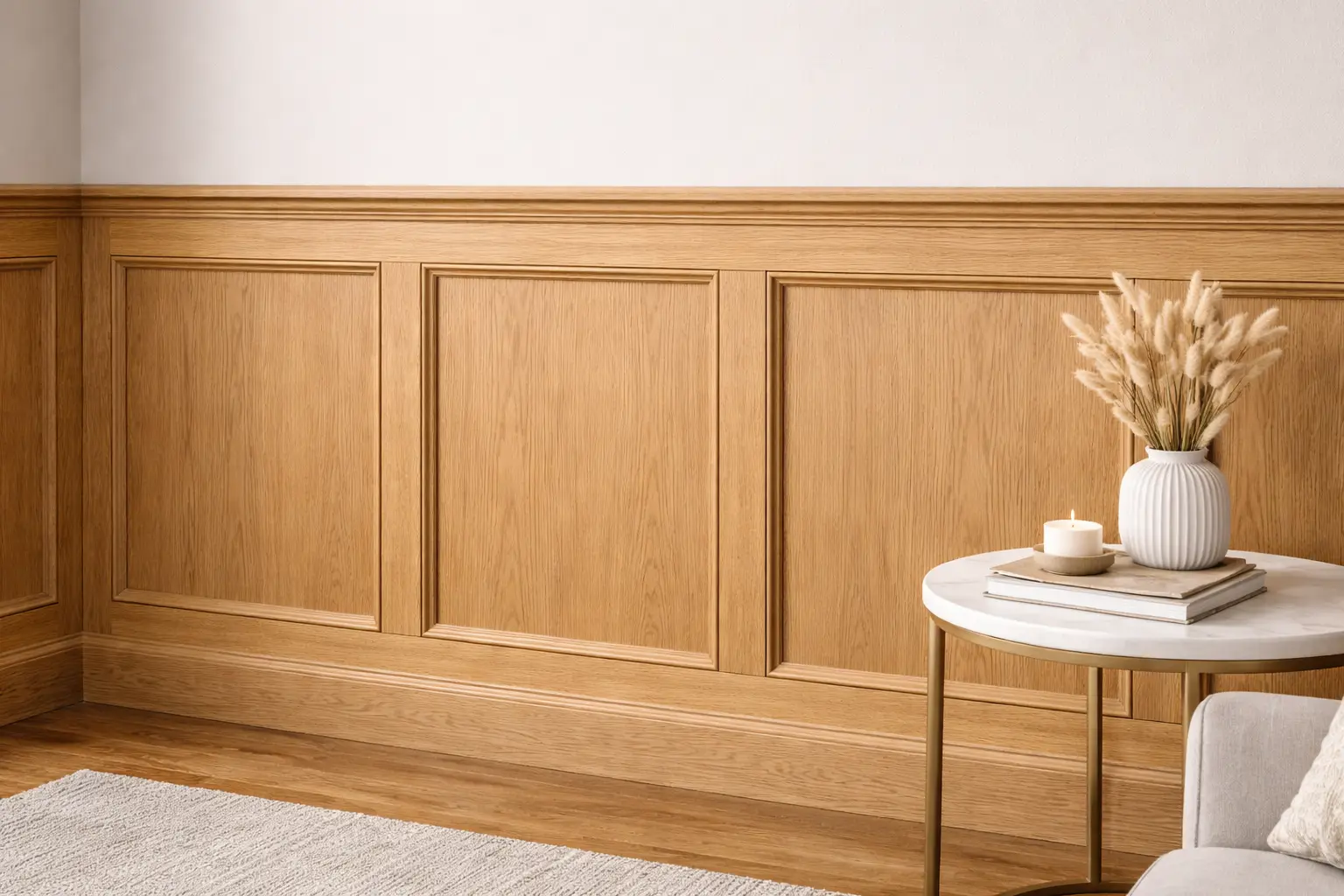
Wall panel with Flaxboard insulation
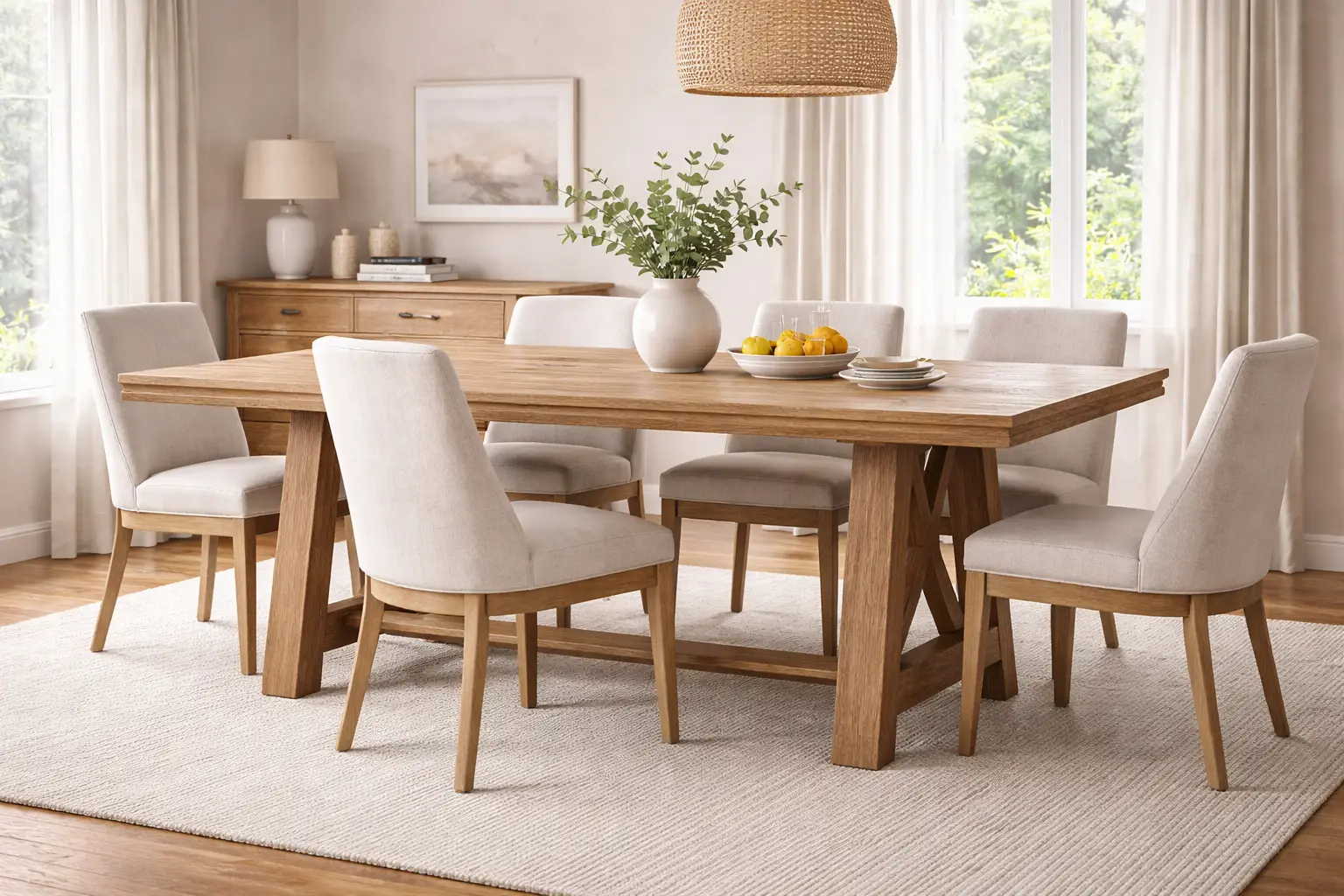
Furniture production with Flaxboard
Specifications
Thicknesses
25–50 mm
Standard and custom
Standard format
2,500 × 1,220
mm — custom dimensions possible
Lambda value
0.071
W/m·K at 350 kg/m³
Certifications
NAF
E0–E1, CARB, BioBased
Interested in Flaxboard?
We help you find the right Flaxboard solution for your production. Contact us for quotes, samples or technical advice.